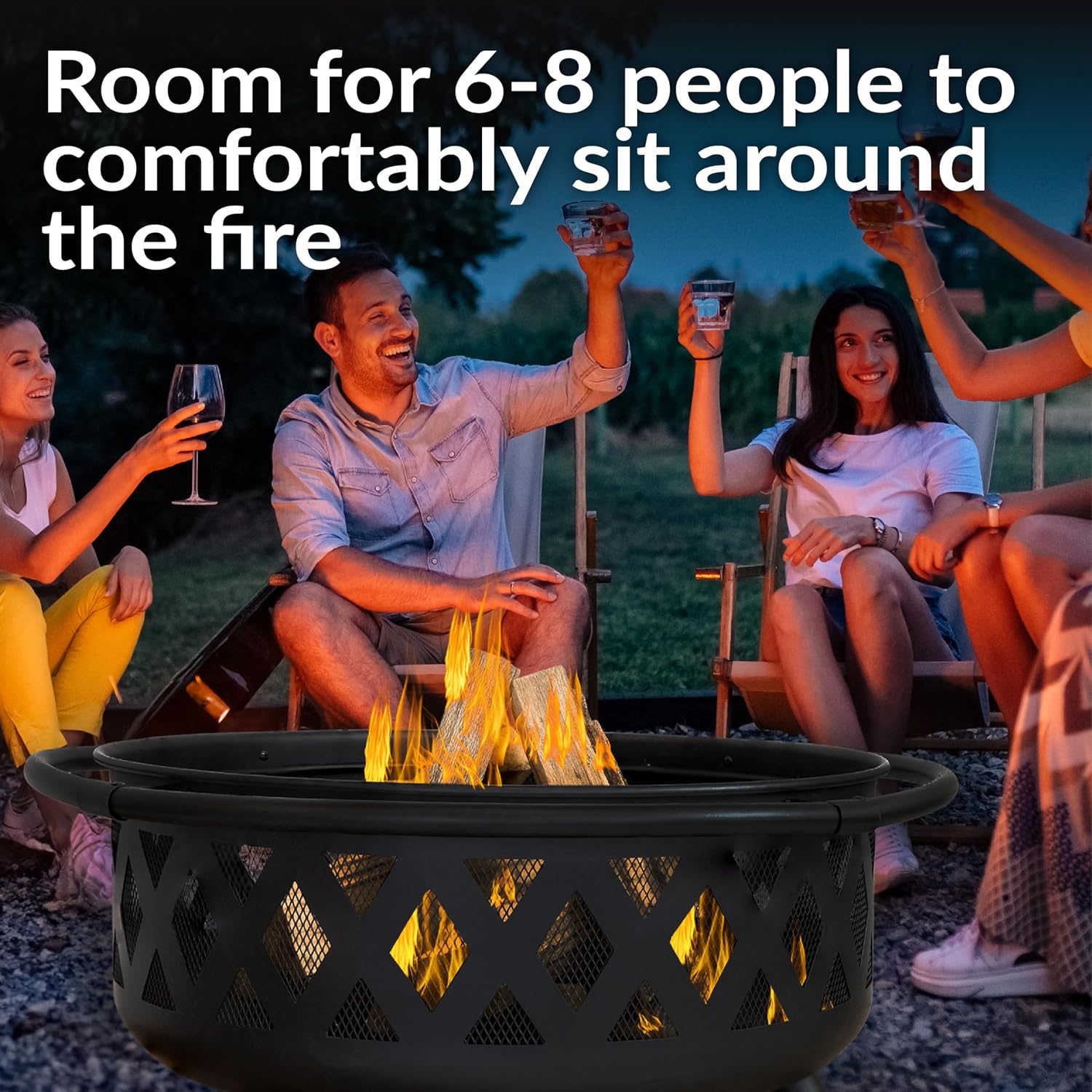
A fire pit bowl is the metal or stone basin that holds your wood fire — the part that takes the direct heat, absorbs rain and frost, and either holds up for a decade or develops rust-through holes by year three. At the low end of the market, you’ll find bowls pressed from 20-gauge sheet steel (roughly 0.9 mm thick — about the thickness of a credit card stack) selling for $70–$120. At the premium end, 3/16-inch or ¼-inch plate steel bowls in the $200–$375 range are built closer to industrial cookware than patio décor. Between those poles sits a lot of marketing noise: “heavy-duty,” “commercial grade,” and “rust-resistant” appear on products with wildly different actual specs. This guide cuts through that. If you’re currently choosing between two or three bowls, comparing proposals for an outdoor living build, or speccing a fire feature for a client’s patio, the framework below should make the decision straightforward.
Why Steel Gauge Is the First Number to Find
Gauge is a legacy measurement system for sheet metal where lower numbers mean thicker steel — counterintuitive, but critical to internalize. A 20-gauge bowl and a 14-gauge bowl look identical in a product photo. In service life, they are not remotely the same product.
The American Iron and Steel Institute’s Steel Products Manual documents the gauge-to-inch conversions that frame every fire pit spec sheet worth reading:
| Gauge | Thickness (inches) | Thickness (mm) | Common Use Tier |
|---|---|---|---|
| 20 ga | 0.036” | 0.91 mm | Budget / seasonal |
| 18 ga | 0.048” | 1.22 mm | Mid-range |
| 16 ga | 0.060” | 1.52 mm | Mid-premium |
| 14 ga | 0.075” | 1.91 mm | Premium |
| 3/16” plate | 0.188” | 4.76 mm | Heavy-duty / architectural |
| ¼” plate | 0.250” | 6.35 mm | Professional / long-term |
The failure mechanism in thin-gauge bowls is thermal fatigue: steel expands when heated and contracts when cooled. Repeated expansion-contraction cycles work-harden thin metal and eventually crack it, especially at welds. A 20-gauge bowl run hard twice a week in a humid climate commonly shows weld separation or rust-through perforation within 18–36 months. Owners across aggregated reviews on Hearth.com and Bob Vila’s buyer research consistently flag this failure pattern on sub-$100 bowls, regardless of brand.
The practical rule: For occasional seasonal use (10–20 fires per year), 18-gauge is a defensible floor. For frequent use (40+ fires per year) or year-round outdoor exposure, 14-gauge minimum. For a client spec where the bowl is a design anchor — visible from the living room, part of a hardscape investment — 3/16” plate is the right call.
Grate Design: The Variable Retailers Undersell
The grate is the elevated rack inside the bowl that holds wood off the bowl floor, allowing air to circulate underneath the fire. Most buyers don’t even look at grate specs. That’s a mistake — grate design directly affects burn quality, ash management, and bowl longevity.
Three grate geometries dominate the market:
1. Flat bar grates (parallel steel bars, typically ½”–¾” flat stock) Found on most mid-range bowls. Adequate airflow, but the flat profile traps ash quickly and restricts the draw once a fire is burning down. Ash accumulation insulates the bottom of the fire from air, producing more smoke and incomplete combustion. This is the grate type on most bowls in the $90–$175 range.
2. Round bar or rebar grates More common on entry-level products. Structurally weaker under repeated heat cycling. Family Handyman’s fire pit guidance notes that rebar-style grates can bow and sag after a season of regular use, which tilts logs toward the bowl wall — accelerating localized heat stress in the bowl itself.
3. Elevated star or basket grates (sometimes called “fire grate baskets”) The superior geometry. A basket grate lifts the wood 3–5 inches off the bowl floor, maximizes underfire air, and centers the fire mass away from the bowl walls. This reduces direct wall heat and meaningfully extends bowl life. It also makes ash cleanup faster — ash falls through to the bowl floor below the basket. This grate style is standard on bowls above $200 and is an upgradeable accessory for bowls that ship with a flat grate.
A note on grate material: Most grates are mild steel, which rusts. Premium bowls from brands like Sunnydaze Design and Solo Stove’s larger format products use high-temperature powder-coated or bare corten (weathering steel) grates that accept surface rust without progressing to structural rust. This Old House’s outdoor fire pit coverage consistently highlights grate replaceability as an underrated spec: a bowl built to accept a standard 24” or 30” replacement grate is more valuable long-term than one with a proprietary fixed grate you can’t source.
The $70–$375 Price Map: What You’re Actually Buying at Each Level
$70–$120: The Seasonal Bowl
At this price, you’re typically looking at 20-gauge or 18-gauge pressed steel, a flat-bar grate, and a powder coat that owners report chips within one to two seasons. These bowls are frequently sold at home improvement retailers under house brands. They serve a real use case: a first patio, a rental property, a temporary setup while a permanent fire feature is being designed. Do not spec these for a client, and don’t buy one expecting a five-year service life.
$120–$200: The Competent Middle
This is where 16-gauge and occasional 14-gauge bowls appear, usually from brands with real product lines (Sunnydaze Design, Hampton Bay’s upper tier, Blue Sky Outdoor Living’s standard series). Grate quality is better, though still often flat-bar. Owners in aggregated reviews at Bob Vila and This Old House rate this tier positively for 3–5 year residential use with basic off-season storage. If you’re helping a client choose a fire pit for a patio budget under $500 total, this is the realistic sweet spot.
$200–$300: The Sweet Spot for Serious Use
At this price, 14-gauge becomes the norm. Basket grate geometries appear. Brands like Sunnydaze’s premium line, Elementi’s steel bowls, and the lower end of American Fyre Designs’ offerings enter the conversation. Owners consistently report meaningfully better burn performance and no structural failure through 5–7 seasons of regular use. Powder coat quality is higher — multi-stage application is common in this tier. This is the range worth recommending for a homeowner who will use the fire pit 30+ times per year.
$300–$375: Architectural Plate Steel
Here, 3/16” and ¼” plate bowls from fabricators and premium brands dominate. These are welded (not pressed), often hand-finished, and designed to accept full hardscape integration — set into a stone surround, mounted on a custom pedestal, or specified as part of an outdoor kitchen layout. Esschert Design and American Fyre Designs both have bowls in or near this range. The service life math shifts entirely: owners of plate steel bowls in Hearth.com’s long-thread discussions routinely report 10+ year service with only surface maintenance.
By the Numbers:
- 20-gauge bowl wall: 0.036” thick
- ¼” plate bowl wall: 0.250” thick — 6.9× the material
- Typical failure point for 20-gauge (moderate use): 18–36 months
- Typical failure point for ¼” plate (moderate use): 15–25 years (with surface maintenance)
- Price delta between those two outcomes: roughly $250
Climate and Coating: The Variables That Override Everything
Steel thickness is the primary variable, but your climate determines whether even a premium bowl needs extra protection.
Coastal and high-humidity climates: Salt air and persistent humidity accelerate oxidation on bare steel and compromise powder coat from the edges inward. In these environments, reviewers and owners consistently report that bare corten steel (weathering steel, like Cor-Ten A) outperforms powder-coated mild steel — corten develops a stable oxide layer that seals the surface rather than flaking. Brands like RealFlame and several custom fabricators offer corten bowls specifically marketed to coastal buyers. The tradeoff: corten runoff (the orange-brown rust water that bleeds off the bowl in early weathering) will stain concrete or light-colored stone. Budget for sealant on the surrounding hardscape.
Freeze-thaw climates (Zones 5 and colder): The main risk isn’t the steel — it’s the finish. Water trapped in powder coat micro-cracks expands on freezing and accelerates delamination. Family Handyman’s fire pit guidance recommends full off-season storage or a fitted weatherproof cover for any bowl in a hard-freeze climate. A cover also blocks standing water from pooling in the bowl, which is the primary driver of interior rust pitting.
Arid climates (Southwest, high desert): Thermal cycling is severe but humidity is low. Thin-gauge bowls fail here from thermal fatigue, not rust. The pitch to clients in these climates is plate steel or cast iron — the mass absorbs and distributes heat more evenly, reducing the stress concentration at welds that kills lighter bowls.
The Decision Framework
If you’re currently at the point of choosing between products or advising a client, run through this in order:
If use is fewer than 20 fires per year, budget is under $150, and the buyer will store it seasonally → 18-gauge bowl with a flat-bar grate is defensible. Set expectations at 3–5 years.
If use is 30–50 fires per year, climate is moderate, and the buyer has a $150–$250 budget → Go to 14-gauge minimum, basket grate geometry, from a brand with replaceable grate availability. Sunnydaze’s premium tier and Blue Sky Outdoor Living’s upper range qualify.
If the bowl is part of a hardscape or patio design investment, or the client is in a coastal or severe climate → Specify 3/16” plate or ¼” plate. Treat corten seriously in coastal zones. Elevate the grate spec to a basket design. American Fyre Designs and Elementi both have bowls and surround systems built for this use case.
If the buyer leads with “I want it to last” above everything else → The honest answer is that ¼” plate welded steel is the only bowl category where long-run ownership math works in their favor. The $300 price point is real money, but at 15+ year service life, it’s also the cheapest per-year option in the lineup.
The spec sheet tells you the gauge. The climate tells you the coating. The use pattern tells you the grate. Put those three together and the right bowl is usually obvious.