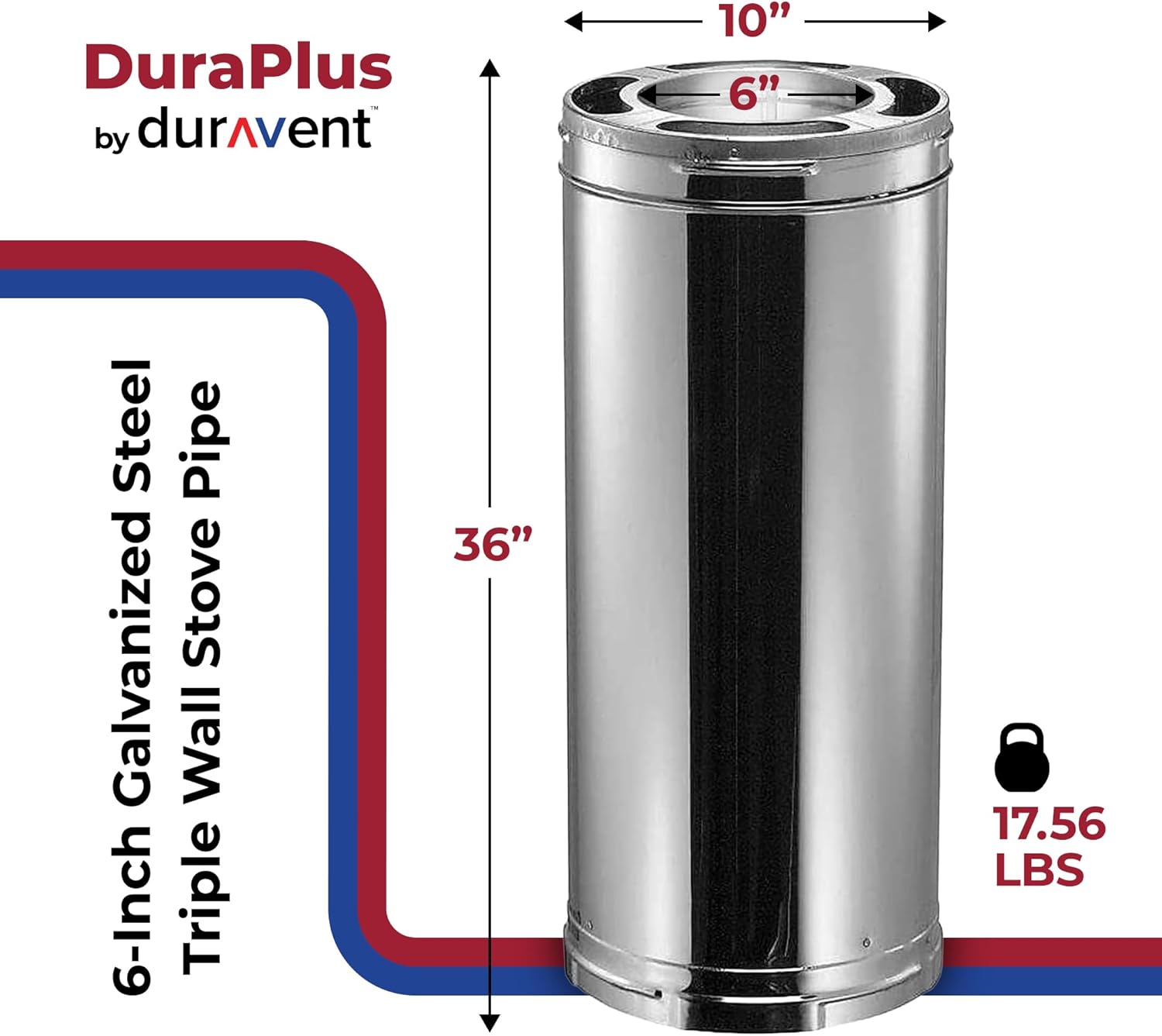
If you’re planning an outdoor fireplace — the kind built into a patio wall or set as a freestanding unit on your deck — the visible stonework or steel firebox is only half the project. Running up through the structure is a chimney flue system: a series of insulated, double- or triple-wall metal pipe sections that carry combustion gases safely out of the firebox and above the roofline or pergola. Unlike a simple clay chimenea you can buy at a garden center, a built-in outdoor fireplace requires a flue that meets specific safety standards, and the pipe sections must come from a compatible system — you can’t mix and match brands the way you might with garden hose fittings. This article explains how the two dominant flue brands — DuraVent and Selkirk — compare, why cross-brand compatibility is a real issue on real job sites, and how to make a defensible specification decision before your project is framed and sheeted.
Why Flue Compatibility Isn’t a Brand Loyalty Question — It’s a Code Question
Here’s the core issue practitioners run into: a general contractor sources a DuraVent firebox liner because their lumber yard stocks it, then a sub pulls Selkirk sections off his truck because that’s what he had left over from an indoor job. The sections physically fit together — the nominal diameters match, the female/male slip joints engage — and nobody flags it until the inspector shows up.
The inspector flags it.
Per NFPA 211 (2025 edition), the National Fire Protection Association’s governing standard for chimney systems, all components within a listed chimney system must be from the same listed system. That’s not a recommendation — it’s a code requirement adopted by most AHJs (authorities having jurisdiction) across the United States. The logic is material science: wall thicknesses, air-gap spacing, high-temperature insulation density, and locking collar geometry are all calibrated to the specific thermal performance profile of a single manufacturer’s listed assembly. Swap one brand’s tee section into another brand’s run and you’ve created an unlisted assembly. The listing is void. The inspection fails.
Fine Homebuilding’s installer-focused archive on outdoor venting covers this exact failure mode and notes it’s among the most common reasons outdoor fireplace rough-ins get red-tagged on first inspection.
The practical decision frame, then, isn’t “which brand is better” in the abstract — it’s “which brand can I source completely, start to finish, for this specific application.”
DuraVent vs. Selkirk: How the Two Systems Actually Compare
Both DuraVent and Selkirk manufacture UL-listed multi-wall chimney pipe systems rated for solid-fuel and gas-fired outdoor appliances. The differences that matter to a specifier are wall construction, temperature ratings, fitting availability, and regional distribution.
DuraVent
DuraVent’s primary outdoor-fireplace product line is the DVL (Double-Wall Lock-Seam) system for wood-burning appliances and the FasNSeal series for gas-fired units. The DVL uses a stainless steel inner liner with a galvanized steel outer wall separated by an air gap; FasNSeal uses all-stainless construction with a swaged locking joint that published specs describe as tool-free and airtight under field conditions.
DuraVent’s spec sheets rate DVL inner-wall temperature at 2,100°F continuous for the stainless variant, with a corrosion-resistant outer jacket suited to uncovered or semi-covered installations. DuraVent’s distribution network leans heavily toward big-box retail and national HVAC distributors, which makes mid-project restocking relatively straightforward in most metro markets.
The trade-off: DuraVent’s outdoor-specific fitting catalog — tees, storm collars, flashing for non-standard pitches — is robust but SKU-dense. Installers on Hearth.com’s professional forums consistently note that ordering errors on DuraVent fittings (wrong degree offset elbow, wrong termination cap style) are common when the spec sheet isn’t pulled before the order is placed.
Selkirk
Selkirk’s flagship systems for outdoor applications are Metalbestos (a triple-wall, air-insulated system originally designed for high-temperature commercial use) and SuperPro (a double-wall system for residential and light-commercial outdoor fireplaces).
Metalbestos is the heavier-duty specification: triple-wall construction with an insulated air space produces higher surface-temperature retention, meaning gases stay hotter longer in cold climates — an important consideration in Zone 5 and colder markets where draft performance degrades quickly in exposed flue runs. Published specs list Metalbestos at 2,100°F continuous / 2,300°F intermittent, matching DuraVent’s upper rating. SuperPro sits at a lower price point with double-wall construction suited to gas-fired outdoor fireboxes where flue gas temperatures are generally lower.
Selkirk’s distribution skews more toward specialty hearth dealers and masonry supply houses. That’s a feature if your project is in a market with strong hearth trade infrastructure; it’s a liability on tight timelines if your regional distributor is three days out on a reorder.
By the Numbers
| System | Wall Construction | Inner-Wall Rating | Typical 6” Section (list price, May 2026) | Primary Channel |
|---|---|---|---|---|
| DuraVent DVL | Double-wall, SS inner | 2,100°F continuous | $45–$65 | Big-box / HVAC distributor |
| DuraVent FasNSeal | Double-wall, all-SS | 2,100°F continuous | $55–$80 | HVAC distributor |
| Selkirk SuperPro | Double-wall, SS inner | 1,700°F continuous | $40–$60 | Hearth dealer |
| Selkirk Metalbestos | Triple-wall, insulated | 2,100°F / 2,300°F | $80–$120 | Specialty/masonry |
List prices reflect distributor-published pricing as of spring 2026; installed cost with labor varies significantly by market.
Where Cross-Brand Compatibility Claims Break Down in Practice
This is the section that saves projects. There is a category of “universal” or “adapter” fittings on the market — typically generic-branded couplers that claim to bridge DuraVent and Selkirk systems. You will find them at some specialty suppliers. Do not use them on a permitted project.
Here’s why. UL 103 (the Underwriters Laboratories standard governing factory-built chimneys for residential heating) lists chimney systems as complete assemblies. An adapter coupler between two different listed systems creates a new assembly that holds no UL listing at all. From the inspector’s perspective, the entire run is now unlisted. The fix is a complete tear-out and reinstall — which, on a masonry-clad outdoor fireplace that’s already been veneered, is a very expensive lesson.
NFPA 211’s 2025 edition is explicit on this point: field-fabricated or generic adapter fittings may not be substituted for listed system components. The only legitimate cross-brand connection point is at the firebox collar, where a listed appliance’s flue outlet connects to the beginning of the chimney pipe run — and even there, the connection must comply with the firebox manufacturer’s installation manual.
The Hearth.com professional forum archives document several real-world cases where adapter fittings caused reinspection failures on outdoor fireplace projects. The pattern is consistent: the adapter fits dimensionally but fails the listing test.
Specification Decision Rules for Common Outdoor Fireplace Scenarios
Here’s where the practitioner decision frame becomes concrete. Use these if/then rules as a starting checklist before you finalize your flue specification.
If your outdoor fireplace is wood-burning and located in Zone 5 or colder: Specify Selkirk Metalbestos. The triple-wall insulation maintains draft in exposed, cold-weather flue runs where a double-wall system loses temperature fast enough to produce draft failure and creosote condensation on startup. The price premium over double-wall is real — roughly 40–60% per section at list — but the performance difference in northern climates is documented in Selkirk’s published cold-climate application notes and corroborated by installer reports in the Hearth.com archive.
If your outdoor fireplace is gas-fired (natural gas or propane) under a covered patio or pergola: DuraVent FasNSeal is a strong default. Gas flue temperatures run substantially lower than wood-burning systems, so the thermal performance advantage of triple-wall construction is largely irrelevant. FasNSeal’s all-stainless construction handles the corrosive condensate that gas combustion produces, and its broad distribution network simplifies mid-project sourcing. Confirm your local AHJ’s clearance requirements for covered outdoor installations — NFPA 211 sets minimums, but some jurisdictions add requirements for reduced-clearance installations under combustible pergola framing.
If your project is a prefab firebox from a premium brand (Elementi, American Fyre Designs, etc.) with a specified flue collar size: Start with the firebox manufacturer’s installation manual before specifying any flue system. Premium firebox brands typically list compatible chimney systems by name in their documentation. Elementi, for example, publishes installation guides that name specific DuraVent system compatibility for their gas-fired units. Deviating from that list — even to a technically equivalent product — can void the firebox warranty and create the same unlisted-assembly problem described above.
If you’re on a tight material budget and considering a generic or import flue system: The math doesn’t work. A failed inspection on a clad outdoor fireplace costs $2,000–$8,000 in tear-out and remediation — multiples of the savings from a cheaper pipe run. Budget projects should use Selkirk SuperPro or DuraVent DVL, both of which are listed, widely sourced, and reasonably priced. The savings floor is a listed system; there’s no legitimate value below it on a permitted project.
The Installation Details That Bite Projects After Specification
Getting the brand right is the first gate. These details are the second.
Clearance to combustibles. NFPA 211 sets minimum clearances between chimney pipe exterior and combustible framing, but outdoor fireplace installations under pergolas or within outdoor kitchen structures routinely involve tight framing. Both DuraVent and Selkirk publish “reduced clearance” installation options for specific listed components — these require specific radiation shields and documentation in the permit package. Fine Homebuilding’s venting coverage emphasizes that reduced-clearance assemblies must be explicitly specified and listed, not field-improvised.
Termination height. NFPA 211 requires chimney terminations to extend at least 2 feet above any structure within 10 feet horizontally, and at least 3 feet above the roof penetration point. Outdoor fireplaces near pergola rooflines or second-story decks frequently create geometry that makes this calculation non-obvious. Model the termination height before framing — changing it after rough-in is a structural problem, not just a pipe-length problem.
Storm collars and flashing for exposed installations. Outdoor installations see weather exposure that indoor chimneys don’t. Both DuraVent and Selkirk offer system-matched storm collars and flashing kits; these should be specified as part of the original system order, not sourced generically. Installers on Hearth.com’s forums note that generic storm collars on DuraVent pipe are a recurring source of callbacks on outdoor installations due to fit tolerances that allow water infiltration.
The Bottom Line
If you’re specifying flue for an outdoor fireplace and you’re mid-project, the decision tree is tight: identify your heat source (wood vs. gas), your climate zone, and your firebox manufacturer’s listed compatibility requirements — in that order. Then pick one brand and source the complete run from that system. DuraVent is the easier default for gas-fired installations in temperate climates with big-box access; Selkirk Metalbestos earns its premium in wood-burning, cold-climate, or high-demand applications. Generic adapters and cross-brand mixing are not cost-saving strategies — they’re reinspection risks that price-shop themselves right into the most expensive outcome on the job.
What only your local inspector can answer: whether your jurisdiction has adopted NFPA 211 in full, whether they impose additional clearances for covered outdoor installations, and whether they require a separate permit for the flue system versus the firebox structure. Those calls are worth making before you frame anything.