If you’ve ever lit your chimenea on a cool October evening and pulled out a log that hisses, spits, and refuses to burn cleanly, you’ve already paid the tuition on firewood storage. The fix isn’t buying better wood — it’s keeping the wood you already have genuinely dry. A firewood rack is a frame, usually steel or galvanized metal, that holds split logs up off the ground so air can circulate underneath and moisture can’t wick upward from soil or concrete. Pair it with a fitted cover — a weather-resistant top that sheds rain while leaving the sides open for airflow — and you have a system that protects your investment through shoulder-season rain and hard winter freezes alike. This guide walks through sizing, cover quality, and the three or four decisions that actually separate a rack that works from one that just takes up patio space.
Why Sizing Is the Decision Most Buyers Get Wrong
The instinct is to buy the smallest rack that fits the corner you’ve designated — and then wonder why you’re out of wood by February. The right sizing question isn’t “how much wood can I fit?” It’s “how much wood do I actually burn per fire, how often do I fire up, and what’s my realistic resupply window?”
The rough math, from published burn-rate guidance:
- A typical backyard chimenea burn (1–2 hours): 3–6 split logs
- A covered outdoor fireplace session (2–3 hours): 6–12 logs
- One face cord (a stack 4 ft tall × 8 ft wide × ~16 in deep): roughly 200–250 split pieces
- A standard 4-foot patio rack at capacity: 40–60 pieces, depending on split size
Per the University of Minnesota Extension’s wood-heating guidance, a household burning wood two to three times a week through a six-month season will move through one to two full cords — a volume that makes a single 4-foot patio rack a weekly-resupply scenario, not a set-it-and-forget-it solution.
Practical sizing tiers for patio contexts:
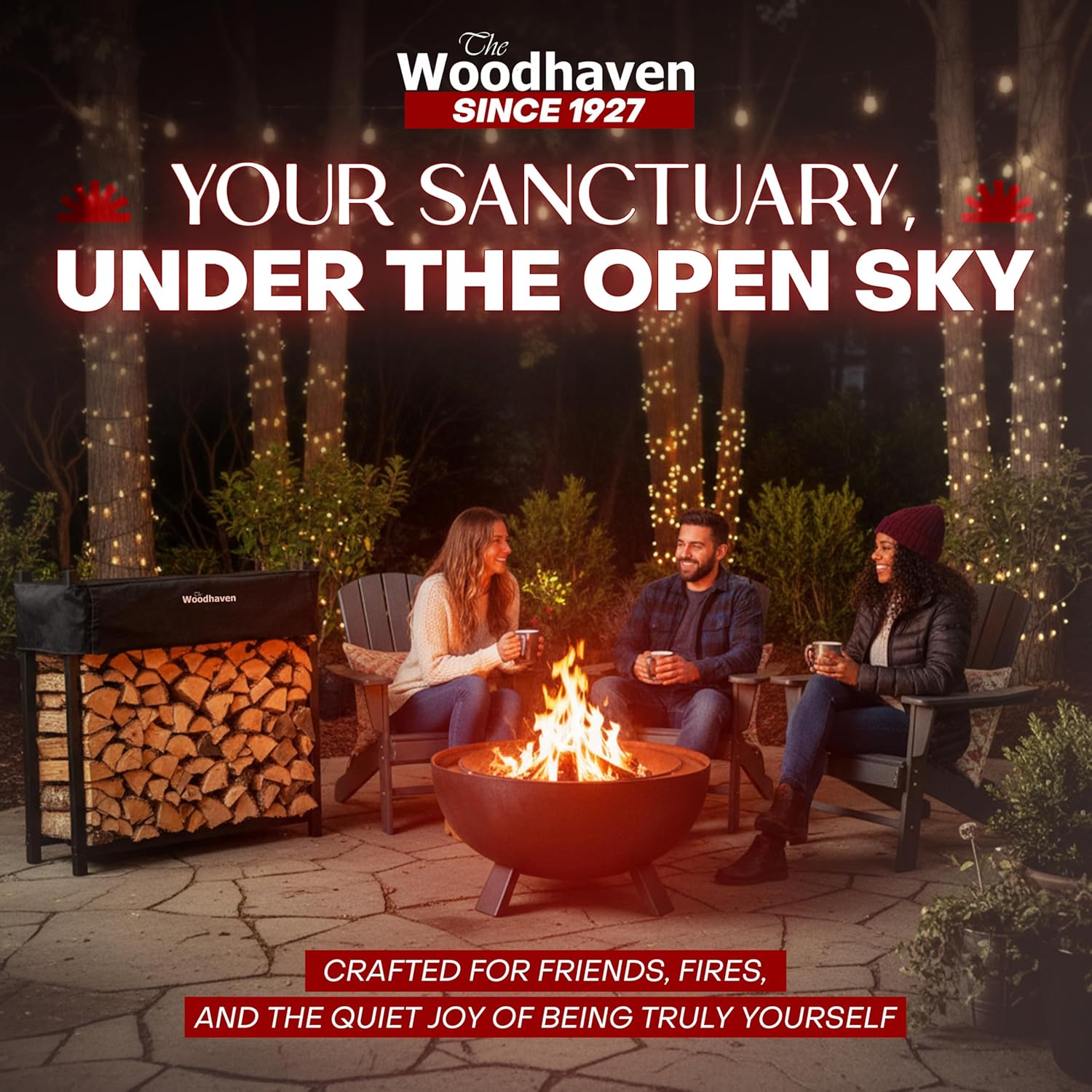
4-foot racks (roughly $40–$80 steel, $90–$150 tubular or powder-coated): Right-sized for the occasional-use patio owner burning once a week or less, or for anyone with covered storage nearby and just needs a “staging” rack at the fireside. The Woodhaven 4-foot log rack — a name that comes up repeatedly in owner reviews for straightforward assembly and stable footprint — fits this use case well, though owners consistently note the standard cover runs slightly short on the back hem and lets in wind-driven rain.
5- to 6-foot racks ($80–$180): The practical sweet spot for anyone running a chimenea or outdoor fireplace more than twice a week through fall and winter. This width holds enough wood for three or four sessions without a mid-week resupply trip. Family Handyman’s firewood storage overview specifically flags that most homeowners underestimate their burn rate by 30–40% when buying their first rack.
Log stores and full-width sheds (6–8 ft wide, $150–$400+): Relevant for the outdoor kitchen and integrated patio segment where the fireplace is architectural and fires are social anchors, not occasional treats. At this volume, you’re talking about a permanent or semi-permanent structure and cover quality becomes as important as the frame.
Cover Quality: Where the Market Splits Between Products That Work and Products That Look Like They Work
Walk the firewood-rack aisle at any big-box store and you’ll see covers in the $15–$25 range made from 150D polyester — that’s a thread-count-style weave density — with heat-sealed seams and no UV inhibitor in the coating. They’ll shed a few rains. By spring they’re chalky, cracking at the fold lines, and letting moisture through the seam splits. This is not a knock on polyester as a material; it’s a knock on insufficient weight and coating quality.
The specifications that actually matter, based on published materials data and aggregated owner review patterns:
Denier (D) — the weave density of the polyester base fabric. The Chimney Safety Institute of America’s firewood storage guidance doesn’t specify cover fabric by denier, but materials-science consensus among manufacturers puts the functional floor for outdoor covers at 210D, with 300D being a meaningful step up in tear and abrasion resistance. Products marketed at 150D or unlabeled denier should be treated as single-season consumables.
Coating type and weight. PVC-backed covers (the coating laminated to the inside of the fabric) offer better waterproofing than polyurethane alone at equivalent denier, but they’re heavier and can crack in sustained sub-zero temperatures. For climates with hard winters, owners in aggregated reviews consistently favor double-stitched, UV-stabilized polyester covers over PVC-back options — lighter, more flexible in cold, and the UV inhibitors matter for summer storage exposure.
Hem depth and tie-down design. This is the detail that separates covers that stay put in wind from covers that become a kite. A 4-inch minimum hem with an elastic perimeter is the baseline. Covers with adjustable cord locks or velcro side straps — a design feature on mid-tier covers in the $30–$60 range — consistently earn better reviews in wind-prone regions than elastic-only designs.
What “waterproof” actually means on a firewood cover. Per This Old House’s firewood storage guidance, the goal of a firewood cover is not to seal the wood hermetically — you want the sides open for airflow to continue seasoning and prevent mold. A cover should protect the top surface and a few inches of the front face from direct precipitation, nothing more. A fully enclosed cover is actively counterproductive: it traps humidity, promotes rot, and can reverse the seasoning progress you’re trying to protect.
The Airflow Principle: Why Ground Clearance Matters as Much as the Cover
Here’s the trade-off most patio owners don’t see until the bottom layer of logs arrives as punky, half-rotten wood: the cover protects from above, but ground moisture attacks from below. A rack sitting directly on concrete or pavers creates a microclimate between the bottom logs and the surface — slow evaporation, trapped humidity, and often a standing-water situation during heavy rain runoff.
The functional fix is ground clearance. Most steel-leg racks provide 4–6 inches of clearance as-built, which is generally adequate on a well-drained patio surface. Bob Vila’s firewood rack roundup notes that racks with wider footings and crossbar bracing at the base hold their shape longer on uneven surfaces and resist lateral rack (the tipping and spreading that happens when heavy loads are stacked unevenly). For covered patios or pergola areas where drainage may be slower, adding a half-inch pressure-treated lumber base rail or plastic risers under the rack feet is a minor investment that pays off in bottom-layer wood quality.
The siting decision: This Old House’s guidance on firewood storage recommends keeping firewood a minimum of 5 feet from the structure to reduce pest harborage risk — a clearance distance that has code implications in some jurisdictions for attached covered patios. If your patio design places the rack adjacent to the house wall, it’s worth a conversation with your local fire marshal or building inspector about whether local ordinance mirrors the NFPA 1 guidance that’s been adopted in many municipalities, which recommends keeping firewood 10 feet from structures. This is one of those situations where a general guide can set the frame but only your local authority having jurisdiction (AHJ) can give you the answer that matters for your specific install.
Material Comparison: Steel, Galvanized, and Powder-Coated Frames
The frame material decision maps closely to the same climate logic that governs chimenea material selection.
Standard steel (painted or bare): Cheapest entry point, common in the $30–$80 range. Fine in dry climates. In humid coastal environments or the Pacific Northwest, expect surface rust within one to two seasons. The rust is mostly cosmetic on structural steel this thick, but it will bleed onto pavers and stain stone or concrete surfaces — a real nuisance on premium hardscape.
Galvanized steel: Zinc-coated to resist rust. Priced in the $60–$120 range for most patio-scale racks. The right call for anyone in a humid or coastal climate. Owners report galvanized racks holding up five to ten years in moderate coastal conditions without meaningful degradation. The downside is aesthetics — galvanized has a utilitarian industrial look that doesn’t integrate as cleanly with architectural outdoor fireplace surrounds or premium patio furniture.
Powder-coated steel: The premium option at $100–$200+. Powder coating is an electrostatically applied polymer finish baked onto the metal — the same process used on high-end chimeneas and outdoor furniture frames. It provides better UV and moisture resistance than standard paint, offers consistent color options (matte black being the near-universal choice for patio integration), and owners consistently report five-plus years of clean appearance in most climates. For the outdoor kitchen or architectural fireplace segment, powder-coated steel is almost always the right call on aesthetic-coherence grounds alone.
Corten (weathering steel) log stores: A niche but relevant option for buyers already invested in a corten chimenea or corten planter aesthetic. Corten develops a stable rust-patina layer that actually protects the underlying metal — the same principle that makes it a popular architectural material. The caveat that applies to corten chimeneas applies here: during the initial patina development phase (roughly the first two wet seasons), iron-oxide runoff will stain adjacent pavers or light-colored concrete. Site accordingly.
The Decision Frame: If X, Then Y
If you burn once a week or less and primarily want a staging point near your chimenea: a 4-foot powder-coated steel rack in the $80–$120 range with a 300D UV-rated cover handles the job. Don’t over-invest here.
If you burn two or more times a week through a four-plus-month fire season: step up to a 5- or 6-foot rack with leg bracing, minimum 4-inch hem cover with tie-down straps, and confirm your siting clears both drainage and the 5–10 foot structure clearance guidance. Budget $150–$250 for rack plus cover.
If you’re specifying for an outdoor kitchen or architectural fireplace project where the rack is visible from primary entertaining sightlines: material and finish matter as much as function. Powder-coated or corten steel in a full log store format integrates cleanly. Budget $200–$400+ and treat the cover as a matching accessory, not an afterthought — several manufacturers offer color-matched covers as optional accessories, and the fit is noticeably better than universal-fit aftermarket covers.
If you’re in a coastal, high-humidity, or heavy-rain climate: galvanized or powder-coated steel is non-negotiable for the frame; add risers under the legs; site the rack away from structure walls and drainage shadows; and check local ordinance on setback distances before finalizing placement. The wood will thank you — and so will your pavers.