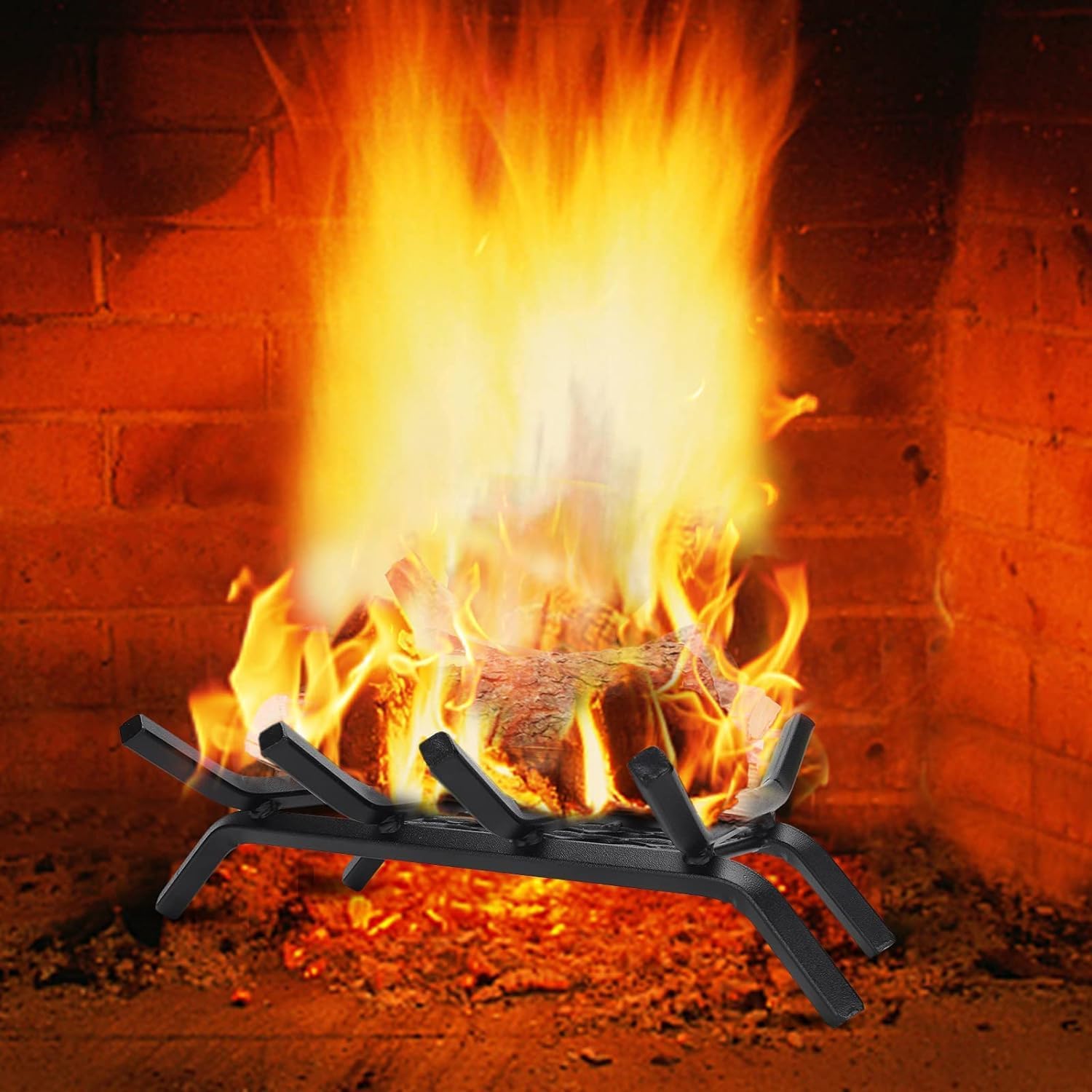
A fire pit is a simple thing at its core — a contained space where wood burns and people gather. But the accessories that surround it are where a lot of money gets wasted and a lot of frustration quietly builds. A warped grate that lets logs roll out, a tool set that bends on first contact with a real log, a vinyl cover that traps moisture and quietly rots your investment — these aren’t hypothetical problems. They’re the actual pattern that emerges when you read through aggregated owner reviews and long-run user reports on products across the $60–$600 price range. This guide names the accessories that genuinely change how a fire pit performs, holds up, and looks over a full season — and is honest about the ones that are mostly packaging.
Whether you’re finalizing the accessory package for a $200 bowl pit or specifying add-ons for a $2,000 architectural cast-iron or corten steel unit, the decision logic is the same: match material durability to your climate, match tool gauge to your actual fire-tending habits, and don’t pay for a cover that isn’t rated for your precipitation load.
Grates: The One Accessory You Probably Shouldn’t Skip
A fire grate is a steel or cast-iron platform that holds logs elevated above the floor of the pit bowl, allowing airflow underneath. That airflow is the whole game — it’s what turns a smoldering log pile into a clean, hot burn. Without it, wood sits in its own ash, combustion stays incomplete, and you end up poking the fire every ten minutes.
The material decision here is straightforward:
- Tubular mild steel grates in the $25–$60 range are the most common. Owners consistently report warping within one to two seasons of regular use, particularly in pits running oak or hickory (both dense, high-BTU hardwoods that sustain higher firebox temperatures). For occasional use — say, six to twelve fires per year — they’re serviceable.
- Cast-iron grates in the $60–$150 range retain heat better, resist warping, and distribute weight more evenly. Bob Vila’s buyer’s guide on fire pit grates notes that cast iron is the recommended choice for anyone burning hardwood consistently or running a pit multiple times per week.
- Solid-bar heavy-gauge steel grates (typically 3/4-inch or 1-inch round bar, welded construction) in the $80–$200 range are what you’ll see recommended in long-run reviews for high-use settings. They’re heavier to handle but owners report they stay dimensionally stable over three or more seasons.
Sizing matters more than most buyers realize. A grate that’s 2–4 inches smaller in diameter than your pit’s interior is the working rule — you want airflow around the perimeter, not a grate pressed against the bowl walls. For a standard 36-inch bowl pit, that means a 30–32-inch grate. This Old House’s fire pit selection guide specifically flags undersized grates as a top owner complaint in the first season of use.
The upgrade worth considering: Adjustable-height or elevated “campfire grate” designs that raise logs 4–6 inches off the pit floor. These are particularly useful in pits with limited airflow drainage or in climates with high humidity where ash compacts quickly. Published specs on these designs consistently put combustion efficiency higher than flat grates at the same fuel load.
Tool Sets: Where Budget Buyers Consistently Overpay for Underperformance
A standard fire pit tool set — poker, tongs, brush, and stand — looks similar across a $30 price point and a $150 price point. The difference is in wall thickness, joint construction, and handle material, and it shows up fast under real use.
By the numbers:
| Price tier | Typical poker gauge | Handle type | Owner-reported failure point |
|---|---|---|---|
| $25–$50 | 16–18 gauge | Hollow tube, riveted | Bend at mid-shaft within first season |
| $60–$100 | 12–14 gauge | Solid or reinforced | Grip fatigue over time; durable shaft |
| $120–$200+ | 10–12 gauge | Wrapped, riveted, or forged | Rarely reported structural failure |
The pattern across aggregated reviews is consistent: tools in the $25–$50 range bend at the point where the poker contacts a dense log under leverage. This is a geometry problem — the moment arm of a 30-inch poker multiplies the force at the contact point, and thin-wall steel fails there first. Consumer Reports’ outdoor buying guidance and owner review aggregations both flag tool gauge as the primary driver of satisfaction in this category.
What you actually need vs. what sets include:
- Poker: Non-negotiable. Use it every fire.
- Tongs: Useful for log repositioning. Quality matters — spring-loaded tongs with a positive grip close cleanly; flimsy ones slip.
- Brush: Ash cleanup between fires. Bristle material should be metal (brass or steel), not synthetic — synthetic bristles melt.
- Stand: Useful for keeping tools organized near the pit. Weight and base stability matter; narrow bases tip in wind.
Practical decision rule: If you’re running the pit more than twice a week or burning hardwood consistently, don’t buy below the $80–$100 range. If the pit is a seasonal occasional-use unit, a mid-range set holds up fine. The Hearth, Patio & Barbecue Association’s consumer trend reporting notes that tool set replacement — buying a second set within 18 months — is one of the most commonly cited buyer regrets in the fire pit category.
Covers: Material Science in a Category Where It’s Usually Ignored
A fire pit cover is the accessory category with the highest variance between what’s marketed and what holds up. The core function is simple: keep precipitation and debris out of the bowl between fires, slow oxidation on the interior surface, and protect any grate or burner components you’ve left inside.
The material failure modes by climate:
- Polyester covers (PVC-backed): Dominate the sub-$40 market. In dry climates with UV exposure, they fade and crack within one to two seasons. In humid climates, the non-breathable backing traps moisture against the pit surface — which accelerates rust on steel pits and causes spalling (surface cracking and flaking) on clay chimeneas subjected to freeze-thaw cycles. Family Handyman’s fire pit safety coverage specifically flags trapped moisture as a primary driver of premature pit deterioration.
- Solution-dyed polyester or acrylic fabric (Sunbrella-grade): Runs $60–$150. Breathable, UV-stable, and significantly more resistant to moisture trap. Owners report these covers maintaining shape and water-repellency through three or more full seasons. Worth the premium in any climate with regular rain or significant seasonal humidity swings.
- Fitted aluminum or powder-coated steel lids: Offered by some manufacturers (American Fyre Designs, Elementi) as OEM accessories for their specific bowl models. These are the cleanest solution for long-term protection and visual coherence — the lid integrates with the pit’s design rather than looking like an afterthought. Price premium is $80–$200 over a fabric cover for the same pit, but owners consistently report better fit, zero moisture trap, and significantly longer service life.
One measurement most buyers skip: Check whether the cover is rated for snow load if you’re in USDA hardiness zones 5 or colder. Flat fabric covers over a standard bowl pit can accumulate 20–40 lbs of wet snow in a single storm event. Covers without a reinforced center support collapse into the pit bowl, trapping moisture and potentially warping grates underneath. This matters most for covers on deep bowl designs where the cover spans a significant unsupported distance.
The upgrade worth considering for premium pits: A two-layer system — a fitted fabric cover for shoulder-season use, plus a snug manufacturer-specific aluminum lid for overwinter storage. The combination keeps the pit properly protected through freeze-thaw cycles without the thermal expansion and condensation issues that come from a single airtight metal cover used year-round in temperature-variable climates.
The Upgrades That Actually Move the Needle
Beyond the core three, there’s a second tier of accessories where the value proposition is real but contingent on your specific setup and use pattern.
Spark screens / ember guards: A dome or flat screen that covers the pit during burning to contain sparks. Non-negotiable in any setting with deck boards, wood pergola framing, or dry vegetation within 15–20 feet of the pit. Family Handyman’s fire pit safety guidance recommends spark screens as standard practice for any above-grade or covered outdoor installation. Look for 1/4-inch or smaller mesh — larger openings pass embers that are still hot enough to ignite dry material. Stainless steel mesh outlasts galvanized by two to three seasons in humid or coastal climates.
Log racks with covers: If you’re storing wood adjacent to the pit, a covered log rack keeps the top layer dry without requiring you to tarp-and-stake every time. Owners report that even a basic $60–$80 rack with a fitted cover meaningfully reduces the kindling frustration of wet surface wood. This is a convenience item, not a performance item — but it’s one of the highest-satisfaction purchases in the category based on review patterns.
Ash removal systems: Dedicated ash buckets with lids and long-handle scoops are a legitimate quality-of-life upgrade for high-frequency users. Standard galvanized steel ash buckets run $20–$35 and are rated to contain hot ash safely for disposal — this is a safety item, not just a convenience one. Consumer Reports’ outdoor equipment guidance notes that ash disposal is a consistent underemphasized fire safety step among casual users.
The Decision Framework
If you’re building out an accessory package right now, here’s the distilled logic:
If your pit is a casual seasonal unit ($60–$200 range, used six to twelve times per year): A mid-gauge cast-iron grate ($60–$90), a single quality-brand solution-dyed polyester cover ($60–$100), and a $70–$100 tool set with a solid poker covers the functional requirements without over-investing.
If your pit is a premium architectural unit ($500–$2,000 range, used weekly in-season): Specify the manufacturer’s OEM lid if available, add a heavy-gauge welded steel or cast-iron grate sized to your exact bowl interior, and buy tools in the 10–12 gauge range. Add a spark screen rated for your firebox diameter. The total accessory spend at this tier is typically $300–$500 — roughly 15–25% of pit value, which tracks with what landscape architects and outdoor kitchen designers report as a reasonable specification allowance.
On timing: The HPBA’s consumer trend data and seasonal pricing patterns both point to late August through mid-October as the window when fire pit accessories see the deepest discounts — end-of-season clearance on covers, grates, and tool sets from major retailers typically runs 20–35% off. If your pit is already installed and you’re building out the accessory kit, that window is worth waiting for on the non-urgent items.
The honest summary: most accessory categories in this space are worth one upgrade step above the cheapest option available. The grate, the cover material, and the poker gauge are the three places where the difference between tiers is measurable and persistent. Everything else is calibrated to your use frequency and your tolerance for replacement cycles.