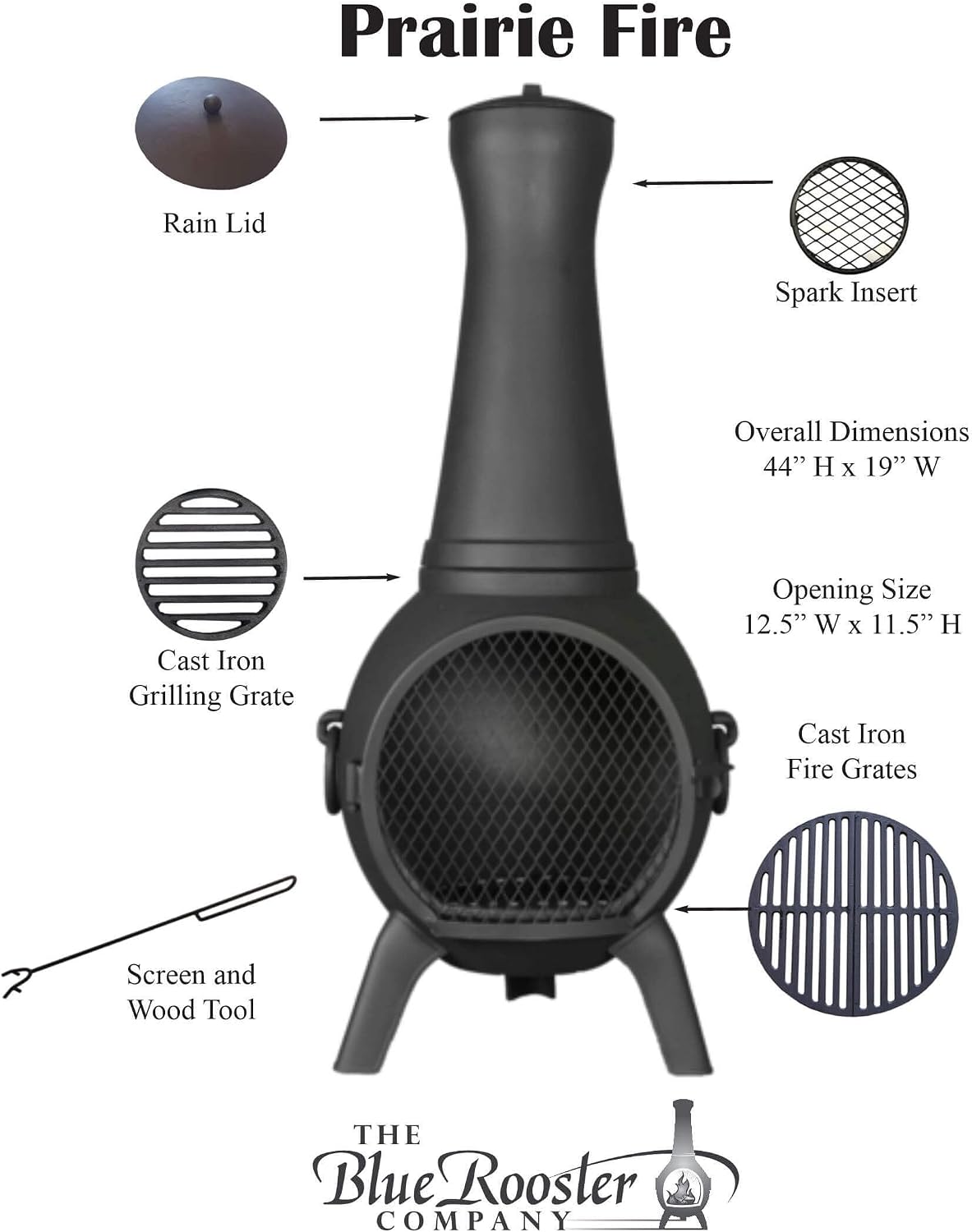
A chimenea (chim-eh-NAY-ah) is a freestanding outdoor fireplace — typically a bulbous fire chamber sitting on a pedestal, with a narrow vertical chimney stack rising from the top. The two materials you’ll encounter most often in the $300–$1,500 price band aren’t clay (the classic terracotta version) or cast iron — they’re cast aluminum and powder-coated or weathering steel. Cast aluminum is made by pouring molten aluminum into a mold; the result is a thick, one-piece casting that won’t rust. Steel chimeneas are fabricated from flat or rolled steel plate, welded or bolted together, and usually finished with high-heat powder coat or left as bare corten (a self-patinating weathering alloy). Both materials look great on day one. The question this article answers: which one still looks good — and holds together structurally — five winters from now in your specific climate? If you’re currently choosing between SKUs or signing off on a spec for an outdoor living project, what follows is the decision framework you need.
How Each Material Actually Fails
Understanding the failure modes before you buy is the whole game here.
Cast aluminum doesn’t rust — that’s the headline. Aluminum oxidizes, but the oxidized layer (aluminum oxide) is non-porous and bonds tightly to the surface, acting as its own barrier coat. Owners in coastal Florida, Pacific Northwest rain-shadow zones, and anywhere with salt air consistently report that cast aluminum chimeneas show essentially no surface degradation after five-plus years, provided they received a basic annual cleaning. The Hearth, Patio & Barbecue Association’s Outdoor Hearth Products Consumer Guide notes that aluminum castings are among the lowest-maintenance metal options for permanently installed outdoor hearth products precisely because of this self-protecting oxidation behavior.
Where cast aluminum does fail is thermal stress. Aluminum expands and contracts roughly twice as much as steel per degree of temperature change — approximately 23 µm/m·°C for aluminum versus 12 µm/m·°C for mild steel, per published materials-science data in the ASM International Metals Handbook. In a thick casting, this is manageable. But in thinner-walled castings — typically anything under about 4 mm wall thickness — repeated fire-to-cold cycles in climates with large daily temperature swings (Mountain West, Upper Midwest winters, high-desert Southwest) can initiate hairline cracking at weld points or thin sections over three to seven years. This Old House’s Chimenea Buying Guide flags this as the primary structural concern with budget-tier cast aluminum units that cut wall thickness to hit a lower price point.
Steel chimeneas fail primarily through corrosion — but the timeline and severity vary enormously by finish type and climate:
- Bare mild steel (the cheapest fabricated units, often under $200) will surface-rust visibly within one wet season in any humid climate. This is a cosmetic and eventually structural problem. It is not a category to recommend for outdoor permanent or semi-permanent installation.
- Powder-coated steel is the workhorse of the $300–$800 range. A quality powder coat applied at 60–80 microns thickness to properly prepared, shot-blasted steel gives good corrosion resistance — but the coating’s integrity depends entirely on the prep work beneath it. Owners in high-salt coastal environments consistently report that powder coat on steel chimeneas begins to show rust bleed-through at weld seams and cut edges within two to four years, even on brand-name units. The American Galvanizers Association’s report on corrosion performance of zinc coatings versus bare steel makes clear that any discontinuity in a protective coating — weld seams, drill holes, mounting brackets — becomes the corrosion initiation site, and salt aerosol accelerates this process dramatically.
- Corten (weathering) steel is the premium steel option. Corten (ASTM A242/A588 alloy) develops a stable, adherent rust patina over 12–24 months that blocks further corrosion in most non-marine environments. The tradeoff: during the patina-formation period, corten runs orange-brown staining onto anything below it — concrete pavers, wood decking, limestone coping. This isn’t structural damage, but it is a real aesthetic concern for premium hardscape. Corten also loses its self-protecting behavior in true marine environments (within roughly one mile of salt water), where it continues to corrode rather than stabilizing.
The Climate-by-Climate Comparison
Here’s the honest decision frame by region, organized by material tier.
Budget Tier: What You Get Under $500
HERSENT
$14.49
In stock on Amazon
Check price on AmazonAt $300–$500, you’re buying cast aluminum or powder-coated steel that hits the material’s floor, not its ceiling. Cast aluminum units in this range frequently come in under 3 mm wall thickness — published specs from several import-focused brands confirm this, and units that don’t publish wall thickness at all are themselves a warning sign. Powder-coated units at this price are often using minimal surface prep.
Bob Vila’s guidance on choosing outdoor fireplaces identifies this price band as appropriate for seasonal or occasional use only, not year-round installation. In humid coastal climates, budget powder-coated steel will show corrosion bleed at seams within two seasons. In freeze-thaw climates, thin-wall cast aluminum carries meaningful cracking risk. These are not five-year investments.
Climate verdict at this tier: Budget cast aluminum is defensible in arid, UV-heavy climates (Phoenix, Las Vegas, interior California) where moisture stress is low and thermal cycling is the primary concern — and even then, only as a seasonal piece, not a permanent landscape fixture. Budget powder-coated steel is difficult to recommend in any climate where moisture is present more than six months per year.
HERSENT
$14.49
In stock on Amazon
Check price on AmazonMid-Tier: The $500–$900 Range Where Longevity Becomes Defensible
BALI
$169.99
In stock on Amazon
Check price on AmazonAt $500–$900, you start getting cast aluminum with documented 4–5 mm wall thickness and powder-coated steel from manufacturers that specify shot-blast surface prep. This Old House’s Chimenea Buying Guide and the HPBA Outdoor Hearth Products Consumer Guide both identify this band as where genuine longevity claims become defensible rather than marketing language.
For humid coastal environments (Atlantic Seaboard, Gulf Coast, Pacific coast within roughly two miles of salt water), cast aluminum at this tier wins clearly. Powder-coated steel will fight a losing battle against salt aerosol regardless of prep quality. Cast aluminum’s corrosion immunity is a structural advantage here, not just a cosmetic one. Look for published wall thickness specs of 4 mm or above — brands that don’t publish this figure in their spec sheets should be deprioritized.
For humid continental climates (Upper Midwest, New England, Great Lakes, mountain regions with freeze-thaw cycling), this tier is competitive between materials. Freeze-thaw cycles don’t damage aluminum or steel the way they damage clay. What matters is whether moisture pools inside the firebox. Both materials handle freeze-thaw well if the firebox drains and dries. The thermal expansion concern for thin-wall aluminum is real in this climate; 4 mm+ wall thickness is the spec threshold that separates acceptable units from risky ones. Powder-coated steel from a brand that documents shot-blast prep is a credible alternative.
For arid Southwest and high-desert climates (Phoenix, Albuquerque, Las Vegas, interior California), UV and thermal cycling are the stressors, not moisture. Cast aluminum handles UV without finish degradation. Powder coat on steel will chalk and fade in intense UV over three to five years, requiring refinishing. Either material works here; choice shifts to aesthetics, weight preference, and whether the owner will commit to powder-coat maintenance.
Fine Homebuilding’s outdoor hearth materials reference notes that in low-humidity climates, the maintenance gap between cast aluminum and powder-coated steel narrows considerably — the absence of persistent moisture means the coating has far fewer opportunities to fail at seam discontinuities.
BALI
$169.99
In stock on Amazon
Check price on AmazonPremium Tier: $900–$1,500+ for Permanent Installation
The
$689.00
In stock on Amazon
Check price on AmazonAt $900–$1,500+, you’re in corten steel fabrication territory, architectural cast aluminum with applied finishes, and custom-scale units designed for permanent landscape installation.
Corten steel is the long-game choice for continental and Pacific Northwest climates if two conditions are met: the installation surface can tolerate two seasons of orange patina runoff, and the site is not within roughly one mile of salt water. In the Pacific Northwest, significant rainfall during the patination window means planning for orange staining on pavers for the first two wet seasons — this is a real conversation to have at spec time, not after installation. Once the patina stabilizes, maintenance drops to essentially zero. For premium hardscape projects with limestone coping or composite decking, installers should consider temporary placement on a sacrificial surface during patination or factor in a professional cleaning of surrounding materials.
Architectural cast aluminum at this price point carries documented 10-plus year longevity claims backed by warranty documentation — the kind of spec that holds up in landscape architecture project deliverables. The external finish doesn’t rely on a coating; the metal itself is the structure, which means the longevity conversation with a client ends with “essentially nothing required” rather than “annual touch-up.”
The math for a client-facing outdoor living project: a $600 cast aluminum unit with documented 4 mm wall thickness and a five-year realistic service life in a coastal humid climate costs $120 per year of material life. A $1,200 architectural corten unit in a continental climate with a fifteen-year realistic service life costs $80 per year. The second figure is easier to justify on a $4,000-plus outdoor living project invoice — and easier to stand behind when the client calls in year seven.
The
$689.00
In stock on Amazon
Check price on AmazonMaterial Property Summary
| Property | Cast Aluminum (4 mm+) | Powder-Coated Steel | Corten Steel |
|---|---|---|---|
| Corrosion resistance (salt) | Excellent — inherent | Moderate — coating-dependent | Poor in marine, excellent inland |
| Thermal expansion (µm/m·°C) | ~23 | ~12 | ~12 |
| Typical weight (medium unit) | 25–45 lbs | 40–70 lbs | 45–80 lbs |
| Price range (mid-size unit) | $350–$900 | $200–$700 | $500–$1,500+ |
| Maintenance cycle | Annual wipe-down | Annual inspection + touch-up | None after patina stabilizes |
Sources: published manufacturer specification sheets; ASM International Metals Handbook thermal expansion data; HPBA Outdoor Hearth Products Consumer Guide category data.
The Maintenance Cost Nobody Prices In
Both materials require something, even if neither requires much.
Cast aluminum: An annual wipe-down with mild detergent, followed by inspection for cracking at thin-section areas (the chimney collar joint is the most common initiation site), is sufficient. No refinishing is required. The firebox interior can be left as-is; the external finish doesn’t rely on a coating.
Powder-coated steel: Annual inspection of the coating is required, with touch-up paint — high-heat rated, 1,200°F minimum, color-matched to the original finish — applied to any chips or rust bleed points before they spread. Failing to do this in a humid climate converts a cosmetic issue into a structural one within two to three seasons. Factor one to two hours of labor per year plus $20–$40 in materials into your true annual cost.
Corten steel: Near-zero maintenance after the patina stabilizes — but the two-year stabilization window requires either accepting orange runoff staining or relocating the unit off finished hardscape for that period.
Per NFPA 211: Standard for Chimneys, Fireplaces, Vents, and Solid Fuel-Burning Appliances, 2024 Edition, clearances and placement requirements apply regardless of material choice. The standard’s guidance on outdoor solid-fuel appliances specifies minimum horizontal clearances from combustibles and requires that the unit sit on a non-combustible surface. Material longevity and code compliance are separate conversations — don’t let one substitute for the other in project documentation.
The Decision Rule
Coastal, high-salt, or perpetually humid environment: Specify cast aluminum at documented 4 mm+ wall thickness. It’s the only category where material immunity to corrosion holds regardless of coating maintenance. Budget $500 or more to reach the genuine quality tier.
Continental, arid, or high-desert climate with freeze-thaw cycling: Corten steel is the long-game choice if the installation surface can tolerate two seasons of patina runoff and the budget supports a $900-plus entry point. Powder-coated steel from a brand that documents shot-blast prep is a credible mid-range option. Avoid sub-$400 cast aluminum in this climate — the thin-wall thermal cycling risk is real and well-documented.
Premium outdoor living project where the chimenea is a design anchor: The material decision is inseparable from the five-year maintenance conversation with the client. Cast aluminum and corten are the two materials where that conversation ends with “essentially nothing required.” Powder-coated steel is the material where it ends with “annual touch-up or plan to replace this.” Price the project accordingly.